
LinkedIn Outreach for Healthcare: How to Reach Hospital Decision Makers
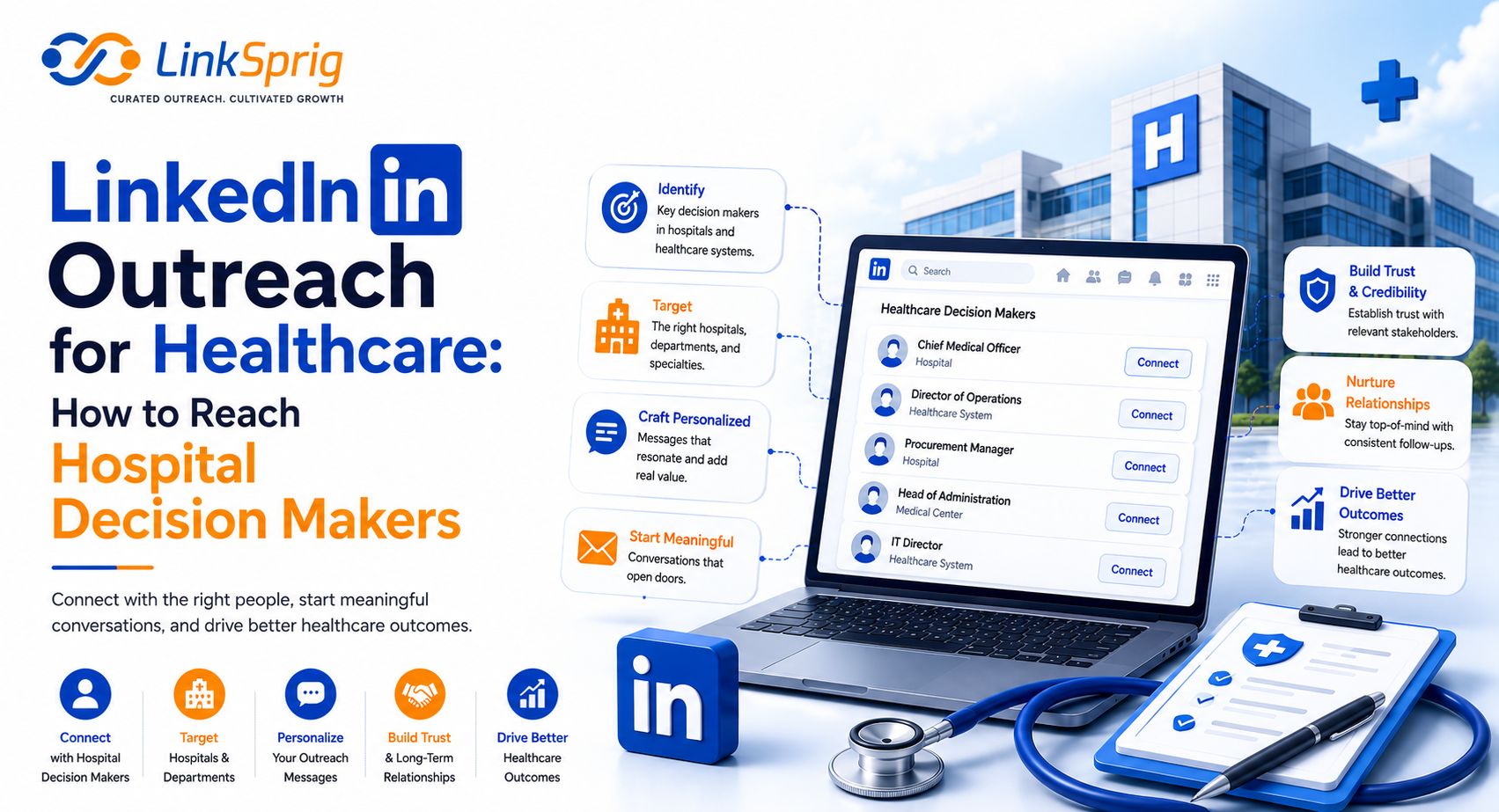
Selling to hospitals and healthcare systems has always been a battle against gatekeepers, legacy procurement systems, and strictly guarded email inboxes. In 2026, the traditional cold calling playbook is effectively dead, with direct connect rates hovering at an abysmal 1.8%. To crack open high-value accounts, modern sales development representatives (SDRs) and healthcare executives are turning to professional networks. Executing a highly personalized strategy for LinkedIn outreach for healthcare is no longer just an alternative channel—it is the definitive way to bypass the administrative firewall, establish clinical credibility, and start peer-to-peer conversations with hospital decision-makers who hold the keys to million-dollar budgets.
Why Traditional Healthcare Sales is Broken (and Why LinkedIn is the Remedy)
Hospital procurement is notoriously complex, involving multiple stakeholders from clinical advocates to Chief Financial Officers (CFOs). In the past, medical device and healthcare SaaS sales reps relied heavily on on-site visits, medical conferences, and cold calling. However, industry data from 2026 reveals that 84% of hospital executives refuse to take cold calls, and over 70% of the buying journey is completed before a prospect ever speaks to a sales representative. This is where LinkedIn outreach for healthcare bridges the gap. By leveraging digital touchpoints, you can warm up cold accounts, position your solution against industry benchmarks, and build trust before pitching. Hospital decision-makers are actively using LinkedIn to keep up with clinical research, industry regulations, and operational efficiency trends. When you approach them with value-first insights rather than a hard sales pitch, your response rates can jump by up to 35% compared to traditional cold email campaigns.
Mapping the Hospital Decision-Making Unit (DMU)
Before launching your campaign, you must map the complex ecosystem of hospital decision-making. Unlike standard B2B SaaS where a single VP can sign off on a tool, healthcare sales require consensus. Your LinkedIn outreach for healthcare strategy should segment targets into three primary buckets:
- Clinical Champions: Chief Medical Officers (CMOs), Chief Nursing Officers (CNOs), and Department Heads. They care about patient outcomes, clinical workflow efficiency, and reducing clinician burnout.
- Financial & Operational Buyers: Chief Operating Officers (COOs), Chief Financial Officers (CFOs), and Procurement Directors. Their primary focuses are cost reduction, ROI, and resource optimization.
- Technical Gatekeepers: Chief Information Officers (CIOs) and Chief Information Security Officers (CISOs). They evaluate integration capabilities, EHR compatibility, and strict data security compliance.
By tailoring your connection requests and initial messages to the specific pain points of these distinct personas, you ensure your value proposition resonates instantly.
The Multi-Touch LinkedIn Outreach Workflow for Healthcare
To successfully engage busy healthcare executives, you cannot rely on a single, generic message. You need a structured, multi-touch sequence that builds familiarity over time. Here is a proven, high-converting workflow designed for 2026:
- Day 1: Profile View and Soft Engagement. Visit the prospect’s profile. Find a recent post or a comment they made and leave an insightful reply or a simple reaction to signal your presence.
- Day 3: The Personalized Connection Request. Send a highly tailored invitation without a sales pitch. Focus on mutual connections, shared clinical interests, or a specific piece of research they contributed to. For example: “Hi [Name], read your recent piece on reducing patient readmission rates. Fascinating approach to post-discharge care. Would love to connect and follow your work here on LinkedIn.”
- Day 7: The Value-First Message. Once they accept, do not pitch your product. Share a highly relevant, ungated asset—such as a case study showing how a peer hospital system saved $450,000 annually or improved clinical workflows by 22%.
- Day 12: The Soft Call-to-Action (CTA). Ask a low-friction question that invites them to share their perspective. For instance: “Are you seeing similar challenges with EHR integration in your department this quarter?”
This systematic approach to LinkedIn outreach for healthcare establishes you as an industry peer rather than a transactional vendor, driving a 3x increase in booking rates.
Navigating Compliance and Security in Healthcare Sales
When conducting LinkedIn outreach for healthcare, compliance must remain top of mind. Hospital administrators and clinical leaders are highly sensitive to regulatory frameworks like HIPAA, GDPR, and SOC 2. To build immediate trust, ensure your outreach copy and your personal LinkedIn profile reflect a deep commitment to security. Never ask for specific patient data or discuss sensitive internal hospital metrics in public or unencrypted LinkedIn message threads. Instead, highlight your organization’s compliance credentials (e.g., “HIPAA-compliant platform” or “SOC 2 Type II certified”) directly in your profile headline or within your case studies. Demonstrating that you understand their regulatory constraints right from the first touchpoint instantly separates professional consultants from amateur spammers, paving the way for secure, enterprise-level sales discussions.
Frequently Asked Questions
- Is LinkedIn outreach effective for reaching busy hospital doctors and CMOs?
- Yes. While clinical staff are rarely at their desks, they frequently check LinkedIn on mobile devices during administrative blocks or off-hours. Tailoring your message to highlight clinical efficiency and peer-reviewed results yields highly favorable response rates.
- How do I avoid sounding spammy when doing LinkedIn outreach for healthcare?
- Always lead with value, research, and peer case studies rather than an immediate sales pitch. Frame your conversation around industry challenges—like clinician burnout or operational overhead—and ask open-ended questions to build genuine rapport first.
