How to Increase Your LinkedIn Connection Acceptance Rate From 20% to 50%
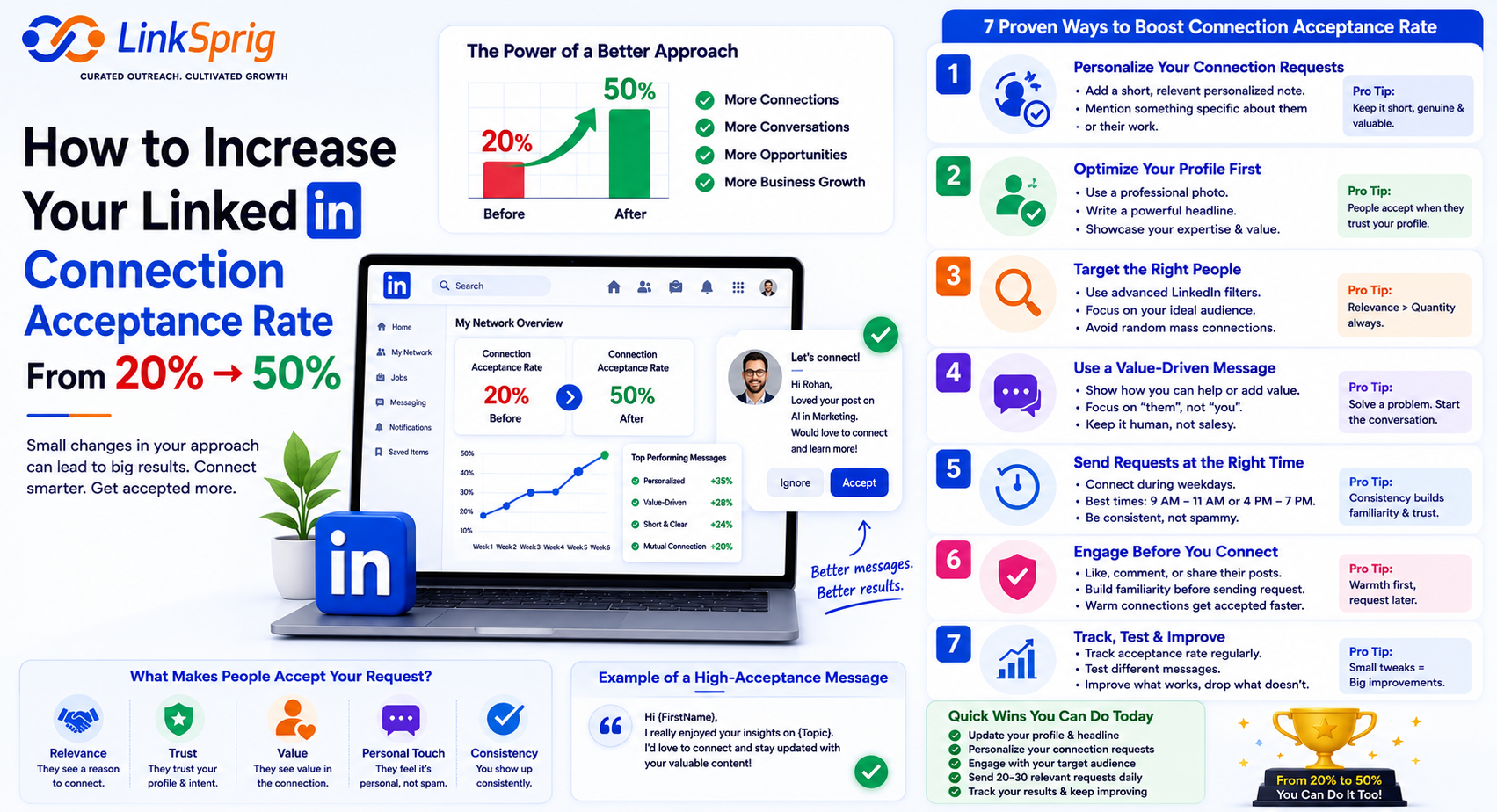
In the highly competitive landscape of B2B sales, your LinkedIn network is your net worth. However, most outbound teams struggle with a dismal 20% connection rate. If you want to scale your pipeline in 2026, learning how to increase LinkedIn connection acceptance rate is no longer optional—it is a core growth lever. By shifting from cold, automated spam to a high-context, value-first approach, top-performing SDRs are routinely hitting 50% or higher acceptance rates. This guide outlines the exact, data-backed blueprint to transform your LinkedIn outreach from ignored to accepted.
1. Optimize Your Profile for Trust (The 3-Second Rule)
Before a prospect even reads your connection note, they will glance at your profile photo, headline, and banner. In 2026, social proof is the ultimate currency. If your profile looks like a digital resume designed to sell them something, your acceptance rate will hover around 15% to 20%. To achieve a 50%+ rate, you must transform your profile into a high-value landing page.
Implement these key profile optimization steps to instantly build credibility:
- The Benefit-Driven Headline: Replace “Account Executive at LinkSprig” with “Helping B2B SaaS teams scale outbound pipeline by 40% without increasing ad spend.”
- The Social Proof Banner: Use a clean, branded banner that showcases a client testimonial, a key industry metric, or a recognizable brand logo.
- The Featured Section: Pin your highest-performing piece of content, a free resource, or an interactive tool that solves a specific pain point for your target buyer persona.
By shifting your profile positioning from self-promotional to resource-oriented, you lower the prospect’s defensive guard immediately, laying the groundwork for a successful connection.
2. Ditch the Generic Templates for High-Context Personalization
The fastest way to get clicked “Ignore” is sending a generic, automated template that says, “I came across your profile and noticed we have mutual connections.” Prospects can spot these canned messages from a mile away. To understand how to increase LinkedIn connection acceptance rate, you must master the art of contextual relevance.
According to recent sales development benchmarks, personalized connection requests that reference a specific event, post, or shared challenge experience an average 54% acceptance rate compared to just 19% for generic pitches. Try this highly effective template framework:
“Hi [First Name], loved your recent post on [Topic]—especially your point about [Specific Detail]. We’re tackling a similar challenge over at LinkSprig. Would love to connect and follow your journey!”
This approach works because it requires zero commitment from the prospect, validates their expertise, and positions you as a peer rather than a pushy salesperson looking for a quick meeting.
3. Implement the 3-Day Omnichannel Warm-Up Sequence
Cold outreach is dead; warm outreach is where the conversions are. Sending a connection request to a complete stranger is a low-probability play. Instead, implement a structured 3-day warm-up sequence before you ever hit the “Connect” button. This micro-engagement strategy builds familiarity, making your eventual request feel natural and welcomed.
Here is the exact tactical workflow used by elite growth teams:
- Day 1: Profile View & Follow. Visit their profile to trigger a notification. Hit the “Follow” button to start seeing their content in your feed.
- Day 2: Value-Add Engagement. Find a recent post they wrote or engaged with. Leave a thoughtful, non-generic comment that adds value to the conversation. Do not pitch.
- Day 3: Send the Connection Request. Send your request referencing the conversation in their comments. For example: “Great chatting in the comments of your post yesterday, [First Name]! Let’s make it official here.”
This simple 3-day workflow can easily boost your connection rate to 52% or higher, while simultaneously building a warm relationship that makes future pipeline conversations significantly easier to initiate.
4. Leverage Advanced Analytics and Iterative Testing
You cannot optimize what you do not measure. To consistently maintain a 50%+ acceptance rate, your team must track performance metrics weekly. Industry data shows that teams utilizing structured A/B testing on their connection notes see a 35% increase in positive response rates over a 90-day period.
When analyzing your outbound campaigns, segment your data by buyer persona, industry, and the specific personalization hook used. If your acceptance rate for a cohort drops below 35%, it is a clear signal that either your target list is too broad or your messaging lacks relevance. Use LinkSprig’s built-in tracking features to isolate variables, refine your value proposition, and continuously double down on the angles that yield the highest acceptance and conversion rates.
Frequently Asked Questions
- Should I always send a note with my LinkedIn connection request?
- Not necessarily. Data shows that a highly personalized, context-rich note beats no note, but a generic, automated template is actually worse than sending a blank request. If you cannot personalize the note, it is safer to send it blank.
- What is a good LinkedIn connection acceptance rate in 2026?
- While the B2B industry average hovers around 20%, top-performing sales organizations using warm-up sequences and optimized profiles consistently achieve acceptance rates between 50% and 65%.
- How many connection requests can I send per week on LinkedIn?
- Currently, LinkedIn limits users to approximately 100 to 200 connection requests per week, depending on account warm-up status and premium subscription levels. This constraint makes maximizing your acceptance rate critical.
