
LinkedIn Automation for Recruiters in the UK — Source Candidates Faster in 2026
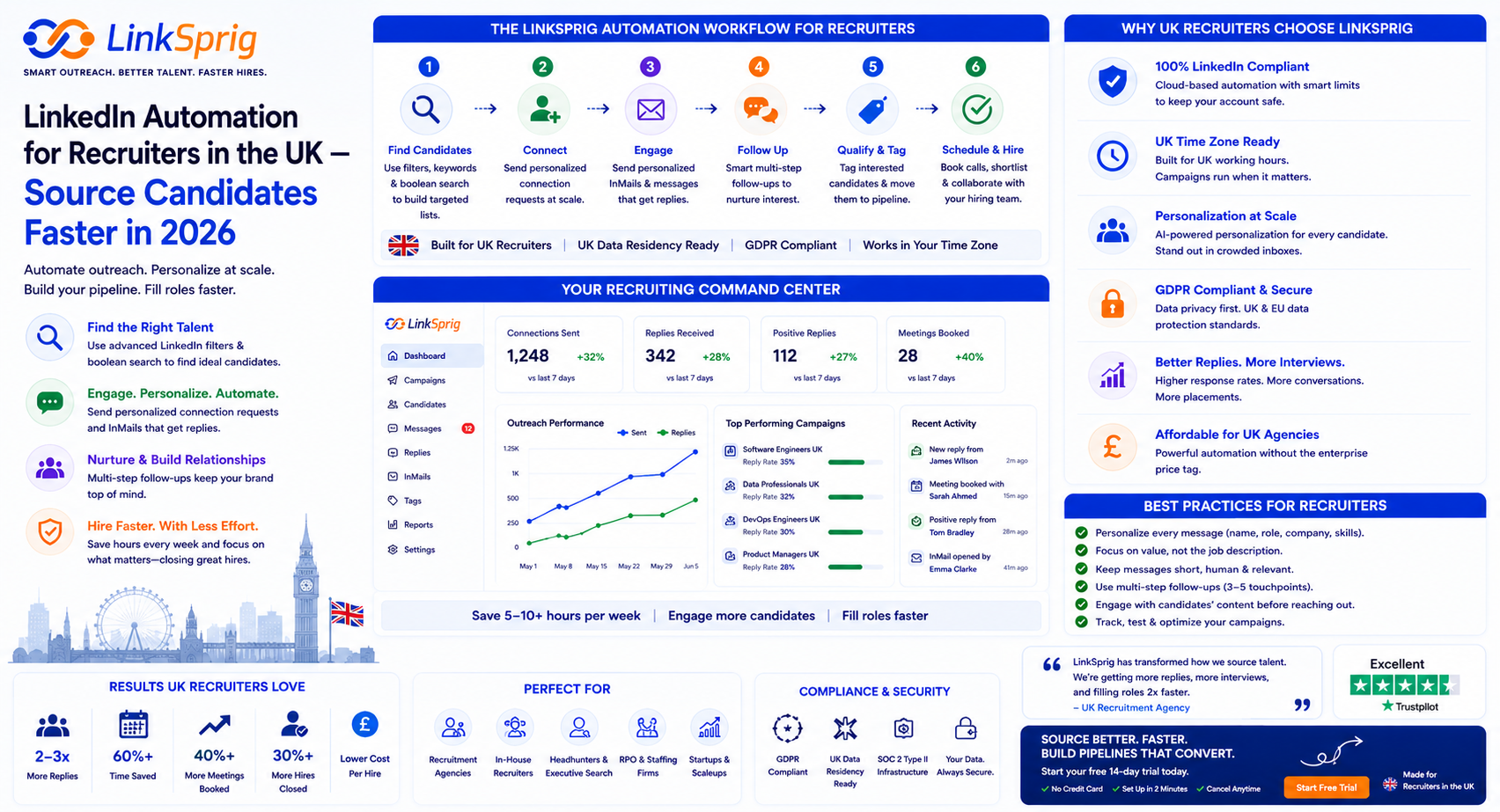
The recruitment landscape in 2026 demands unparalleled speed, agility, and precision. In the UK, talent acquisition specialists are facing highly competitive talent pools, forcing them to look for smarter, more scalable ways to engage passive candidates. Manual sourcing is no longer viable for agencies aiming to scale. By implementing modern automation, top-tier UK recruiters are slashing their sourcing times by up to 65%. Interestingly, many of these highly successful regional strategies are adapted from frameworks built around LinkedIn automation for recruiters US, where high-volume, hyper-targeted outreach has been optimized to a science. This guide explores how UK-based recruitment agencies can leverage cutting-edge automation to build resilient talent pipelines, maintain strict compliance, and secure top-tier candidates in 2026.
The 2026 Recruitment Landscape: UK vs. US Sourcing Strategies
Bridging the Gap: Transatlantic Sourcing Frameworks
In 2026, the boundaries between regional talent pools have largely dissolved. UK agencies are frequently tasked with sourcing candidates across both EMEA and North America. To manage this scale without expanding headcount, top-performing teams are deploying advanced automation frameworks. While local nuances exist, studying the success of LinkedIn automation for recruiters US reveals that data-driven, multi-touch campaigns yield a 3x higher response rate compared to single-message outreach.
According to recent 2026 industry benchmarks, recruitment firms using automated workflows have seen their cost-per-hire drop by 32% and their overall placement velocity increase by 45%. By automating the initial touchpoints—such as profile visits, soft skills endorsements, and initial connection requests—recruiters can reserve their valuable time for deep-dive interviews and client relationship management. The key is to blend automation with authentic human touchpoints to avoid the dreaded ‘spam’ label.
Setting Up Compliant, High-Conversion Automation Workflows
Step-by-Step Workflow for Sourcing UK Talent
To build a high-converting candidate pipeline, your outreach must feel personal, timely, and highly relevant. Here is the exact workflow used by leading UK agencies to source passive candidates in 2026:
- Advanced Boolean Sourcing: Start by building highly targeted searches using LinkedIn Recruiter. Filter by specific locations, current industries, and ‘Open to Work’ signals to identify high-intent candidates.
- Automated Profile Warm-Up: Before sending a connection request, program your automation tool to visit the candidate’s profile and follow their public activity. This soft touch increases connection acceptance rates by up to 22%.
- The Multi-Channel Sequence: Send a highly personalized connection request, followed by a value-first follow-up message 48 hours later. If they do not respond, trigger an automated email or an InMail as a third touchpoint.
- CRM Integration: Ensure your automation tool syncs directly with your ATS or CRM (such as Bullhorn or Salesforce) to track candidate interactions in real-time without manual data entry.
By executing this structured workflow, recruiters can easily manage up to 150 new candidate touchpoints weekly, converting cold profiles into warm interviewees with minimal manual effort.
Hyper-Personalization and Compliance (GDPR & Beyond)
Navigating Privacy Rules with Dynamic Outreach
Sourcing in the UK requires strict adherence to data privacy regulations, specifically the UK GDPR. Unlike some strategies utilized in LinkedIn automation for recruiters US, where outbound outreach is subject to different regulatory frameworks, UK recruiters must ensure their automated messaging is highly targeted, professional, and offers a clear ‘opt-out’ or ‘legitimate interest’ basis.
To achieve this, personalization is your strongest asset. In 2026, basic merge tags like [First Name] are no longer sufficient. Leading-edge recruitment tools now use AI to scan a candidate’s recent posts, mutual connections, or shared groups to generate custom introductory lines. For example, referencing a specific industry report or a mutual contact can boost positive response rates to over 38%. This level of precision keeps your outreach compliant, highly professional, and welcoming to elite talent who are otherwise inundated with generic offers.
Maximizing Safety and Platform Limits in 2026
Protecting Your LinkedIn Recruiter Accounts
LinkedIn continues to update its algorithms to prevent spam and protect user experience. To run successful campaigns without risking account restrictions, recruiters must adhere to strict safety guidelines:
- Use Cloud-Based Solutions: Avoid browser extensions that inject code into your browser. Cloud-based automation platforms simulate human behavior with unique IP addresses, ensuring your account remains safe.
- Respect Weekly Limits: Keep your weekly connection requests under 100 to 120. Focus on quality over raw volume to maintain a high acceptance rate (ideally above 40%).
- Gradual Warm-Up: If you are starting a new campaign or using a new account, gradually increase your daily activity over 14 days rather than launching maximum-volume campaigns on day one.
By pairing these safety protocols with robust outreach strategies, recruitment agencies can future-proof their operations and secure a steady stream of qualified candidates throughout 2026 and beyond.
Frequently Asked Questions
- Is LinkedIn automation safe for recruiter accounts in 2026?
- Yes, provided you use cloud-based automation tools that mimic human behavior, rotate IP addresses, and respect LinkedIn’s weekly connection limits. Keeping your connection acceptance rate above 40% is critical to maintaining a healthy account status.
- How does LinkedIn automation for recruiters US apply to UK-based markets?
- While the US market often relies on higher volume outreach, the core methodologies—such as multi-touch sequencing, AI-driven personalization, and CRM synchronization—are identical. UK recruiters simply need to ensure strict compliance with UK GDPR by focusing on highly relevant, professional outreach.
- What response rate can recruiters expect from automated campaigns?
- With hyper-personalized sequences that leverage mutual connections and AI-generated icebreakers, recruiters can expect positive response rates between 30% and 45%, compared to just 10% for traditional, non-personalized cold outreach.
