LinkedIn Outreach for Logistics & Supply Chain: How to Hook Procurement Decision Makers
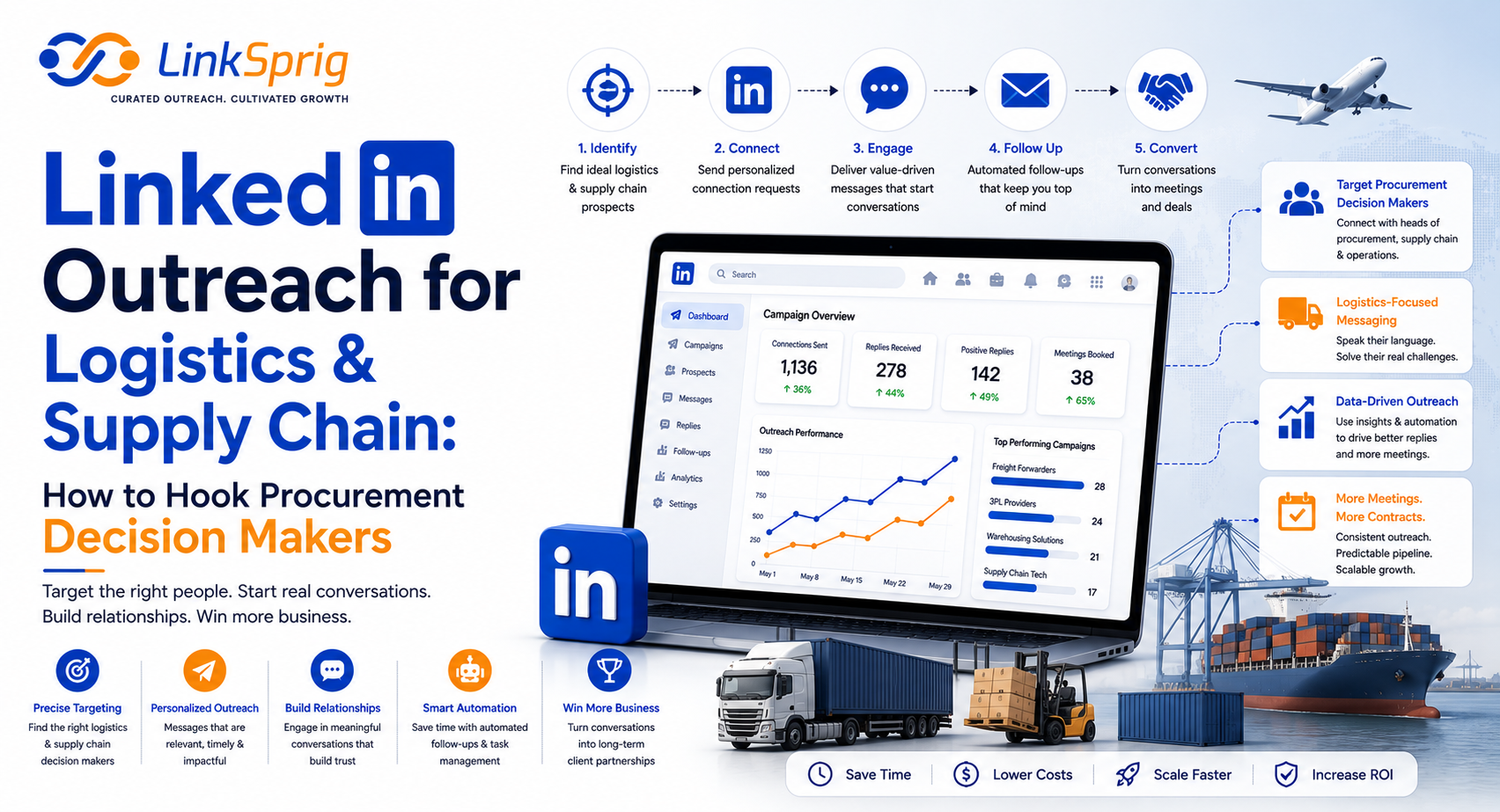
The supply chain and logistics sector has undergone a massive digital transformation. In 2026, relying solely on cold calling and legacy trade shows to secure freight contracts is a losing strategy. Today’s procurement decision makers, supply chain directors, and logistics managers are actively vetting partners online. To capture their attention, third-party logistics (3PL) providers, freight forwarders, and supply chain SaaS platforms must master LinkedIn outreach for logistics companies. This guide breaks down the precise, data-driven workflow you need to bypass gatekeepers, establish authority, and secure high-value contracts with corporate procurement leaders.
Understanding the 2026 Procurement Mindset
Procurement officers in 2026 are highly risk-averse. Following years of global supply chain volatility, their primary objectives are resilience, cost optimization, and visibility. According to recent industry benchmarks, over 78% of enterprise procurement professionals conduct digital research before ever speaking to a sales representative. If your digital footprint is invisible, you are losing deals before they even reach the RFP stage.
When executing LinkedIn outreach for logistics companies, you cannot lead with a generic ‘we have trucks and warehouses’ pitch. Procurement decision-makers receive dozens of low-effort spam messages daily. To stand out, your outreach must address their specific operational pain points: reducing spot-market exposure, improving on-time delivery (OTD) rates, or automating freight audit processes. By framing your outreach around the mitigation of supply chain disruptions, you instantly position your logistics company as a strategic partner rather than a commodity vendor.
The Tactical 4-Step Outreach Workflow
To build a high-performing outbound pipeline, you need a structured, repeatable campaign workflow. Here is the exact framework we recommend for targeting logistics decision makers:
- Identify the Right Targets: Use LinkedIn Sales Navigator to build a hyper-segmented list. Filter by geography, company headcount (e.g., 200 to 1,000 employees for mid-market accounts), and specific job titles such as ‘Director of Procurement’, ‘VP of Supply Chain’, or ‘Global Logistics Manager’.
- Optimize Your Profile for Trust: Before sending a single message, ensure your personal profile looks like a logistics authority. Highlight metrics like ‘99.2% On-Time Delivery’ or ‘Saved clients over $2.4M in annual freight spend’ directly in your headline.
- Deploy Value-First Messaging: Never pitch on the first touchpoint. Instead, share a relevant industry case study or a whitepaper analyzing current freight lane rate trends.
- Automate with Personalization: Leverage smart outreach tools to scale your touchpoints without losing the human touch. Personalized variables like the prospect’s specific industry vertical can boost response rates by up to 42%.
By executing this structured approach, logistics firms can expect a significant lift in their conversion rates. On average, teams utilizing this systematic approach see a 35% increase in connection acceptance rates and a 22% reduction in overall customer acquisition costs (CAC).
Cold Message Templates That Secure Logistics Meetings
Effective copywriting for logistics outreach requires brevity and immediate value. Procurement professionals do not have time to read long-winded paragraphs. Your message should be scannable in under 10 seconds. Here is a high-converting template optimized for LinkedIn outreach for logistics companies targeting mid-market manufacturers:
‘Hi [First Name], noticed you manage supply chain operations at [Company]. With freight rates fluctuating by over 18% this quarter, many [Industry] shippers we partner with are struggling to keep contract rates stable. We recently helped a similar manufacturer secure 98.5% capacity guarantee while cutting spot-market reliance by 14%. Would you be open to a brief, 5-minute exchange of ideas on how we structured their routing guide for 2026?’
This template works because it leverages peer proof, cites specific industry metrics (18% rate fluctuation, 98.5% capacity), and makes a low-friction ask (a 5-minute exchange of ideas rather than a formal sales demo).
Measuring Pipeline and Campaign ROI
Success in B2B logistics sales is a numbers game, but quality always beats quantity. When measuring the performance of your campaign, focus on three primary Key Performance Indicators (KPIs): connection-to-reply rate, meeting booking rate, and pipeline value generated. In 2026, top-performing logistics campaigns achieve an average 25% connection rate and a 12% reply rate from cold prospects.
If your campaign is generating less than a 5% reply rate, it is highly likely your messaging is too self-centered or your targeting is too broad. Refine your list by narrowing down your target industry (e.g., focusing specifically on cold-chain food distributors or automotive parts manufacturers) and tailor your value proposition to their unique regulatory and shipping requirements. Over time, this targeted approach will yield a consistent flow of qualified RFPs and high-value contract opportunities, ensuring a healthy return on investment for your sales development efforts.
Frequently Asked Questions
- Who is the best person to target for logistics services on LinkedIn?
- The most effective targets are Procurement Managers, Directors of Supply Chain, and Logistics Operations Leads. For mid-sized companies, targeting the VP of Operations or Director of Transportation often yields the fastest response times.
- How often should I follow up during a logistics outreach campaign?
- We recommend a 3 to 4-step follow-up sequence spaced over 14 days. Ensure each follow-up adds unique value—such as sharing a new lane-rate report or industry insight—rather than simply ‘checking in’.
